📦 Free Shipping* Australia-Wide over $150. T&Cs apply

💨 Get it fast with Express Post for only $14.95*

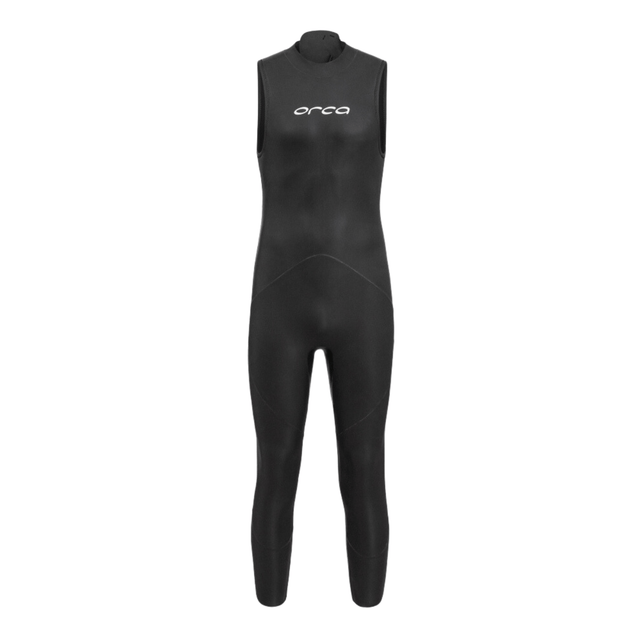
Orca Vitalis Light Sleeveless Men's Openwater Wetsuit

$339.99 $450.00
24% off
Size

  • Climate Positive

  • Simple Returns

  • Super shipping

  • Price Guarantee

Description

The Vitalis Light is a sleeveless men's open water wetsuit - no arms, so nothing restricts the shoulders at all. For warmer water where you want buoyancy and a bit of protection rather than thermal insulation.

Who it's for

Warm water, and swimmers who cannot stand anything on their shoulders. The Vitalis Light Sleeveless gives you the buoyancy and the body warmth of a wetsuit with your arms completely free - no shoulder panel, no restriction, nothing between you and your natural stroke.

Perfect for Queensland summers, warm-water racing, and anyone who has ever cut a swim short because a full suit was fighting their catch.

Buoyancy and flexibility

Sleeveless is the most flexible thing you can wear and still call a wetsuit. You keep the lift through the torso and hips that makes swimming easier, and give up nothing at all in the shoulder.

Getting the size right

This is the decision that makes or breaks a wetsuit, so take your time over it.

Size on body weight: 5 is 61-66 kg, 6 is 67-74 kg, 7 is 75-82 kg and 8 is 82-89 kg.

Snug everywhere is the target, with no slack pockets at the lower back or behind the knees. Getting into it on dry land should be a wrestle - that is what correct feels like, and it lets go the moment you start swimming. Between two sizes, take the smaller one: neoprene gives with wear, and a suit that starts loose flushes water through, which is what makes you cold rather than the water itself.

Looking after neoprene

Rinse it in fresh water after every swim - salt and chlorine both attack neoprene, and neither forgives being left on. Dry it in the shade or somewhere airy inside. Never in the sun: UV is what turns good neoprene hard and brittle, and one Australian summer on a fence will do it.

Hang it over something wide or fold it loosely, and never wring it out.

Water temperature range

As a guide, the Vitalis Light is a 20°C and up suit. It is built for swimmers who want buoyancy and freedom rather than warmth, so it is the summer and warm-water choice - Queensland most of the year, and everywhere else through the season.

Buoyancy comes from a graded thickness through the lower body, up to 4.5 mm in the legs, which lifts your hips without putting anything across your shoulders.

Specifications

  • Type
    Openwater wetsuit, sleeveless
  • Thickness
    Panels up to 4.5 mm
  • Weight
    5: 61-66kg, 6: 67-74kg, MT(6T): 68-76kg, 7: 75-82kg, 8: 82-89kg, 9: 89-97kg, 10: 98-109kg, 11: 107+ kg
  • Chest
    5: 90-95cm, 6: 95-99cm, MT(6T): 95-99cm, 7: 98-104, 8: 104-108cm, 9: 108-113cm, 10: 114-124cm, 11: 123-134cm
  • Length
  • Height
    5: 162-170cm, 6: 167-175cm, MT(6T): 177-190cm, 7: 173-185cm, 8: 180-188cm, 9: 185-193cm, 10: 190-196cm, 11: 193-200cm
  • Width
  • Downloads

Sizing Guide

Additional Information

Cleaning

Neoprene can be damaged by excess salt or other chemicals such as chlorine if used in swimming pools. We recommend washing your wetsuit with plenty of water after each use. A small amount of neutral pH soap can be used and then rinsed out afterwards.

Once clean, make sure prevent it from holding onto too much moisture. Air dry it outside or in a ventilated indoor space, somewhere without direct exposure to sunlight as this can damage the materials.

Storage

Storing your wetsuit properly keeps the materials and seams from creasing and being stretched for long periods of time. It also prevents the material from wrinkling, which can affect both the wetsuit's durability and appearance.

The best way to store a wetsuit is to hang it draped over a hanger from its waist, so that the most delicate areas such as the shoulders and arms do not have any kind of tension on them.

For wetsuits with very flexible shoulders (Apex Flex or Apex Flow), it is important not to place them on a hanger from the shoulder area, as this will degrade the elasticity over time. For the rest of the models, a wide hanger can be used, as long as the wetsuit is not strained in the shoulder or neck area.

Recommendations for use

1) If your suit has Velcro, avoid contact between the Velcro and the inner lining of the wetsuit, as it will damage the fibers in the material. Keep the Velcro covered with the provided fabric patch or make sure that the Velcro is closed, so that the rough part of the Velcro does not damage the inside of your suit.

2) For all suits, especially those made with neoprene, be careful not to damage the neoprene material with your nails when putting on or taking off the suit, as this type of damage is not covered by our warranty policy.

3) Triathlon and open water suits have been designed specifically for swimming. We cannot guarantee correct functioning of the wetsuits for other activities. Any damage to the wetsuit resulting from use in activities other than swimming is not covered by our warranty policy.

4) Avoid leaning on or coming into contact with any surfaces (especially rough ones) while wearing your wetsuit.

FAQ's

I have had a look at your wetsuit size chart but only fit the chest and weight measurements in my chosen size. I am too tall for this size, what should I do?
The most important thing to consider when fitting a wetsuit is that the suit fits correctly on your torso (shoulder to crotch). So, if you are too tall to fit into the corresponding height measurements for your weight and chest size, but you either know that you have a long or short legs or arms, then don’t worry, your core will be warm and the suit will fit you. It may be worth try some swim booties when the temperature starts to drop.

I have had a look at your wetsuit size chart but only fit in the height and weight measurement’s, but my chest is too broad/big, what should I do?
When it comes to being too broad for our size chart (but only a little bit), the best thing to do is to go for a more flexible wetsuit which accommodates your chest or shoulders better. Unfortunately, this does tend to mean spending a bit more, but a correct fitting wetsuit makes a world of difference.

I have had a look at your wetsuit size chart but only fit in the chest and height measurements, my weight is below the minimum for that sized suit, what should I do?
If you are just a bit below the minimum sizing and you are looking at an intermediate suit or above (Sonar or above) then you should be ok and these wetsuit models are cut to be a more ‘athletic’ fit than the entry level suits. If you are substantially below the weight require and near the lower limit of the height and chest size, it may be worth trying a size down in one of the more flexible wetsuits.

Why sleeveless?
Total shoulder freedom. You keep the lift through your torso and hips and give up nothing at all in the catch and recovery.

What water temperature is it good for?
As a guide, 20°C and up. It is built for buoyancy and freedom rather than warmth, so it is the summer and warm-water choice.

When would I choose this over a full suit?
Warm water, and any time a full suit has fought your stroke. It is the Queensland summer answer.

Does it still make me faster?
Yes. The buoyancy through the torso and hips is what lifts your position, and that is where most of a wetsuit's speed comes from.

What size am I?
Size on body weight: 5 is 61-66 kg, 6 is 67-74 kg, 7 is 75-82 kg and 8 is 82-89 kg, with a 6T for taller swimmers.

How do I look after it?
Rinse in fresh water after every swim and dry it in the shade. Sunlight is what makes neoprene brittle.